
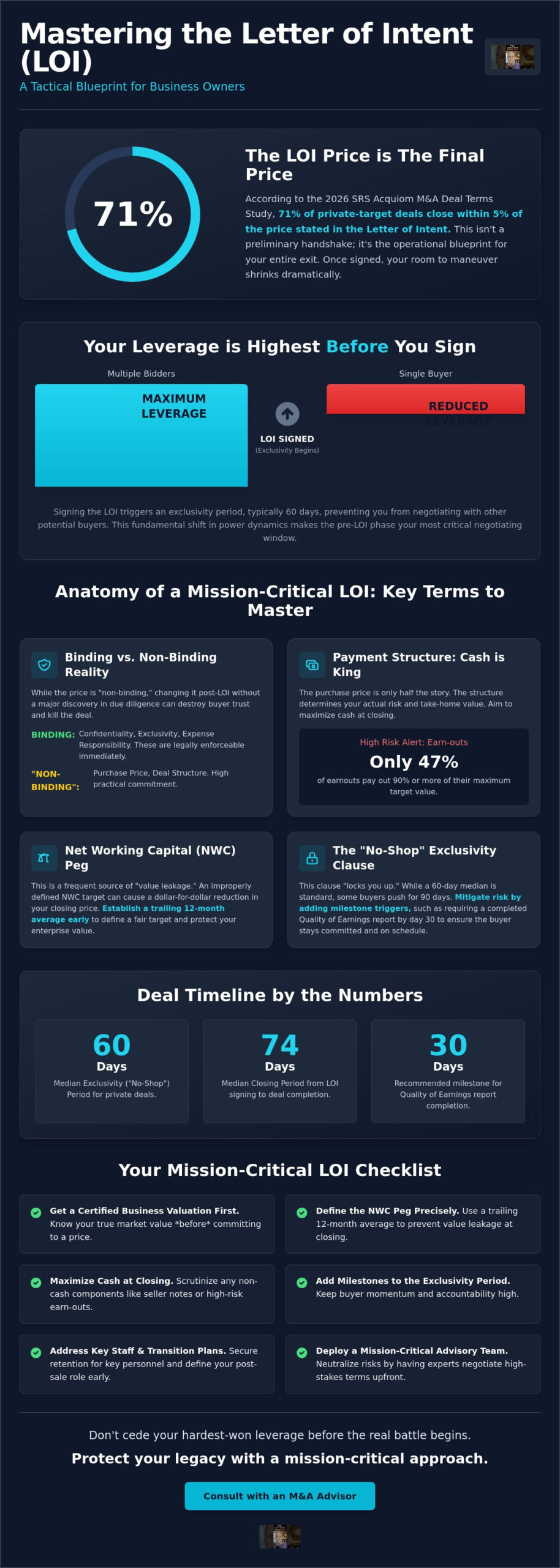
According to the 2026 SRS Acquiom M&A Deal Terms Study, 71% of private-target deals close within 5% of the price stated in the Letter of Intent. This statistic underscores a hard truth for North Texas business owners; once you sign that document, your room for maneuver narrows significantly. Understanding the letter of intent in a business sale isn’t just a legal checkbox. It’s the moment you establish the tactical blueprint for your entire exit. If you treat it as a placeholder, you’re likely ceding your hardest-won leverage before the real battle even begins.
You’ve spent years building your company, so the fear of being locked into a suboptimal deal or losing negotiating power is a valid concern. We understand the high stakes of this transition and the need for a mission-critical approach to your legacy. This guide will help you master the tactical nuances of the LOI to protect your interests and maximize your deal value. We will outline the essential components of a secure deal, including the 60-day exclusivity standard and the specific working capital strategies required to safeguard your enterprise value in today’s market.
Key Takeaways
- Treat the LOI as your operational blueprint, serving as the decisive bridge between initial interest and the rigors of due diligence.
- Protect your hard-earned legacy by understanding the letter of intent in a business sale before you cede control to the buyer.
- Master the tactical nuances of the Net Working Capital peg and payment structures to ensure your enterprise value doesn’t erode during closing.
- Deploy a mission-critical advisory team to negotiate high-stakes terms upfront, neutralizing the risk of deal fatigue or late-stage re-trading.
What is a Letter of Intent (LOI) in a Business Sale?
A Letter of Intent (LOI) is a buyer-originated document that outlines the preliminary agreement for a business acquisition. It serves as the critical bridge between the initial “talking stage” and the high-stakes “due diligence” phase. While the document sets the rules of engagement for the final purchase agreement, it is much more than a simple handshake on paper. The LOI serves as the strategic foundation that dictates the enterprise value and transaction structure for the entire deal.
Understanding the letter of intent in a business sale is vital because it transforms a casual conversation into a formal mission. It signals that both parties are ready to commit significant time and capital to the process. To better understand the operational reality of this document, watch this breakdown of what actually happens once you sign.
Binding vs. Non-Binding: The Tactical Reality
Most LOIs are divided into binding and non-binding sections. Elements like confidentiality, exclusivity, and expense responsibility are legally binding from the moment of signature. Conversely, terms like purchase price and deal structure are typically non-binding. However, the term “non-binding” is often a misnomer that leads sellers into a false sense of security. While you can technically walk away, re-negotiating the price later without a material discovery during due diligence often destroys deal momentum and buyer trust.
Why the LOI is the Peak of Your Negotiating Power
Your leverage as a seller is never higher than the moment before you sign the LOI. At this stage, you may have multiple interested parties and the freedom to walk away. Once signed, the exclusivity period; which has a median length of 60 days for private deals; “locks you up,” preventing you from speaking to other buyers. Because of this shift in power, obtaining certified business valuations is a prerequisite. You must know your true market value before you commit to a price that will be difficult to increase later.
Strategic Maneuvers: Key Terms Every DFW Owner Must Review
Understanding the letter of intent in a business sale requires a deep dive into the specific terms that dictate your final payout. The purchase price is often the primary focus, but the payment structure determines your actual risk. Whether the deal includes cash at closing, seller notes, or earn-outs matters immensely. Data from the 2026 M&A Earnout Survey indicates that only 47% of earnouts pay out 90% or more of their maximum target. This makes negotiating and drafting an acquisition letter of intent with specific attention to the Net Working Capital (NWC) peg a mission-critical task. Defining exactly what inventory and receivables stay with the business ensures you don’t inadvertently leave enterprise value on the table.
- Payment Structure: Aim to maximize cash at closing while vetting the stability of any seller notes.
- NWC Peg: Establish a trailing 12-month average early to prevent “value leakage” during the transition.
- Information Access: Set clear boundaries on what the buyer can scrutinize to protect your proprietary data until the deal is certain.
The Exclusivity Trap: Protecting Your Time
The “No-Shop” clause is a significant tactical risk. While the median exclusivity period for private deals is currently 60 days, some buyers attempt to lock owners into 90-day windows. For a Dallas-based service firm, three months of market inactivity can be devastating if the buyer walks away. We recommend adding milestone triggers, such as requiring a completed quality of earnings report by day 30, to ensure the buyer remains committed. If you need to evaluate your current leverage, consulting with an M&A advisor can provide the necessary clarity.
Defining the Transition Plan and Key Staff
Your North Texas team is the engine of your company’s value. The LOI should explicitly address retention plans for key personnel and define your own operational role post-sale. Aligning on culture fit and leadership expectations before opening your books prevents friction during the 74-day median closing period. Securing these commitments early protects your professional legacy and ensures the mission continues successfully under new command.
Executing the Exit: Negotiating Your LOI with Precision
Signing the LOI isn’t the finish line; it’s the start of a grueling 60 to 90 day sprint toward the closing table. To navigate this phase successfully, you must engage a mission-critical team. This group should include your CPA for tax structural analysis, legal counsel for risk mitigation, and an M&A advisor for tactical coordination. Understanding the letter of intent in a business sale means recognizing that every clause is a lever for your future security. Learn how hiring a business broker in Dallas, TX ensures these terms are handled with professional discipline and tactical focus.
Negotiating hard terms upfront is the only way to prevent deal fatigue. If you leave major issues like the working capital peg for later, buyers may use the pressure of the closing date to re-trade on price. Data shows that the median time from a signed LOI to closing is 74 days. This window is a high-pressure environment where your focus must remain split between the transaction and your ongoing operations. Handling the heavy lifting during the LOI stage protects your leverage before the exclusivity period begins.
From LOI to Closing: The Operational Rollout
Once the ink is dry, the operational rollout begins. This multi-step process starts with a formal due diligence period, typically lasting 45 days. While the buyer scrutinizes your books, you must maintain “business as usual” for your North Texas company. Any dip in performance during this period can give a buyer justification to lower their offer. We provide a proven roadmap to ensure your DFW operations remain steady while the deal moves forward in the background.
When to Walk Away: Maintaining a Mission-First Attitude
Integrity is the bedrock of a successful exit. If a buyer displays red flags like missed deadlines or unexplained changes to agreed terms, it suggests a lack of capability or intent. You must maintain a mission-first attitude. This means being prepared to say “no” to a bad deal even after months of work. Protecting your long-term legacy is more important than a fast exit. A disciplined owner knows that walking away from a compromised LOI is often the most strategic move to preserve enterprise value.
Secure Your Mission Success
The Letter of Intent is far more than a preliminary agreement; it’s the operational blueprint for your entire transition. By establishing hard terms upfront and maintaining your leverage through the exclusivity period, you ensure that your business’s value remains intact. Mastering the tactical elements and understanding the letter of intent in a business sale is the difference between a successful exit and a compromised legacy. You’ve spent years building your enterprise, and the final sprint requires the same discipline and focus that fueled your growth.
At Bravo Kilo Advisors, we specialize in navigating the high-stakes North Texas market for businesses valued between $500,000 and $50 million. We provide Certified Business Valuations to establish a defensible market value and offer strategic M&A advisory with a mission-first attitude. Don’t leave your deal to chance or settle for standard corporate boilerplate. Secure your legacy with a strategic consultation from Bravo Kilo Advisors and ensure your professional transition is handled with precision. Your next chapter deserves a proven roadmap for success.
Frequently Asked Questions
Is a Letter of Intent legally binding in Texas?
In Texas, an LOI is typically a hybrid document where the core transaction terms are non-binding while specific protective clauses are legally enforceable. Confidentiality, exclusivity, and responsibility for professional fees are binding the moment you sign. This structure allows both parties to explore the deal without a full legal commitment to the final sale price or structure.
Because these specific clauses carry legal weight, it’s critical to have an attorney review the binding sections before you commit. This ensures you don’t inadvertently limit your operational freedom or expose sensitive data without proper safeguards during the 74-day median closing period.
How long does a typical LOI exclusivity period last for a DFW business?
The median exclusivity period for private deals between $5 million and $25 million is currently 60 days according to 2026 market data. We generally advise DFW owners to push for a 45 to 60-day window to maintain momentum. Avoiding periods longer than 75 days is essential to prevent your business from being sidelined without a clear path to closing.
Can I negotiate the price after signing an LOI?
You can technically renegotiate the price after signing, but doing so without a material discovery during due diligence is a high-risk move that often kills deal momentum. Understanding the letter of intent in a business sale means recognizing that your leverage is highest before signature. Price adjustments usually only occur if the buyer finds undisclosed liabilities or a significant dip in financial performance during their investigation.
What is the difference between an LOI and a Purchase Agreement?
An LOI is the strategic roadmap that outlines the deal’s framework, whereas the Purchase Agreement is the definitive legal contract that executes the transfer of ownership. The LOI sets the “hard terms” like price and structure to ensure mutual understanding before the parties invest in heavy due diligence. The Purchase Agreement contains the exhaustive representations, warranties, and indemnifications required to finalize the mission and move funds at closing.