
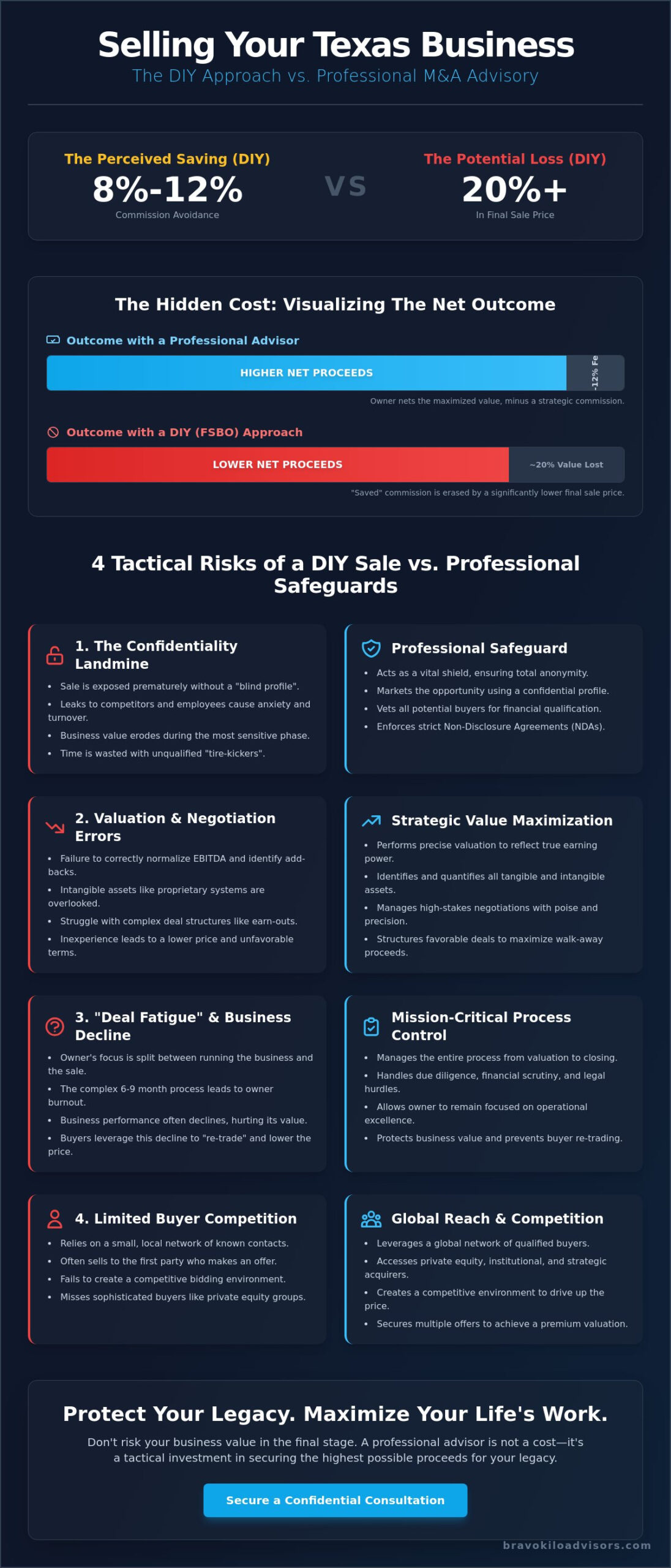
Saving an 8% to 12% commission by selling your business solo often results in losing 20% or more of the final sale price through valuation errors and weak negotiation. You’ve spent years building your legacy, and it’s natural to protect every dollar of that equity. When you ask, “should I sell my business without a broker in Texas,” you’re likely weighing the cost of professional fees against the risk of a confidentiality leak in the competitive DFW market. We understand that the pressure to maximize your walk-away proceeds while managing a mountain of financial paperwork feels like a mission-critical operation where failure isn’t an option.
This strategic review provides a tactical breakdown of the risks and rewards inherent in a solo exit compared to professional M&A advisory. We’ll examine 2026 Texas-specific legalities, current SBA 7(a) interest rates which sit at Prime plus 2.75% for many buyers, and the essential steps to ensure a clean legal exit. You’ll gain a clear roadmap for maintaining total confidentiality and securing the highest possible valuation for your life’s work. By the end of this briefing, you’ll know exactly how to navigate the complexities of the Texas market with the precision and discipline your business deserves.
Key Takeaways
- Understand the 2026 Texas M&A landscape and why DFW business owners often weigh the perceived savings of a solo approach against significant operational risks.
- Evaluate the central question of should I sell my business without a broker in Texas by analyzing how commission avoidance often leads to valuation errors and compromised negotiations.
- Identify critical tactical risks, including confidentiality breaches that alert local competitors and the failure to correctly normalize EBITDA during the valuation phase.
- Discover how elite M&A advisory protects your professional legacy through disciplined exit planning and value enhancement rather than just closing a transaction.
- Learn the mission-first methodology for navigating high-stakes negotiations with the poise and precision required for a clean exit and maximized proceeds.
The Reality of the DIY Business Sale in Texas
The ‘For Sale By Owner’ (FSBO) approach in the 2026 Texas M&A market is often driven by a desire for total control and cost avoidance. Many DFW business owners believe their deep industry contacts make an intermediary unnecessary. They see the typical 8% to 12% commission as a cost to be cut rather than an investment in the final sale price. However, this mindset often overlooks the tactical complexity of a high-stakes exit. When asking, “should I sell my business without a broker in Texas,” you must distinguish between a transactional mindset and a strategic advisory approach.
To better understand the implications of going solo, watch this helpful breakdown:
Finding a potential buyer is frequently the simplest phase of the operation. The real challenge lies in the 6-9 month deployment of due diligence, financial scrutiny, and legal hurdles. A professional business broker doesn’t just find a name; they manage the entire mission-critical process to ensure the legacy you’ve built doesn’t crumble under the weight of poor execution. Without this command-presence, the ‘saved’ commission is often eaten by a lower purchase price or failed negotiations.
The Hidden Costs of ‘Saving’ the Commission
DIY sellers often leave substantial capital on the table. Without a precise texas business valuation, owners fail to normalize EBITDA or account for intangible assets like proprietary systems. This leads to a value gap where solo sellers often net 20% less than those represented by elite consultants. Beyond the money, “deal fatigue” is a silent killer. Managing a complex sale while trying to maintain operational excellence usually leads to a decline in business performance. This gives buyers leverage to re-trade the price late in the game.
Texas-Specific Market Dynamics in 2026
The North Texas buyer pool in 2026 is highly sophisticated. These aren’t just local competitors; they’re private equity groups and institutional investors looking for precision. Expert positioning is required to survive their due diligence. While your local network might provide a lead, global reach ensures you aren’t just selling to the first person who makes an offer. Securing a premium multiple requires creating a competitive environment that DIY sellers rarely have the time or resources to build.
4 Tactical Risks of Selling Without an Advisor
Choosing to bypass professional oversight introduces specific vulnerabilities that can compromise your entire operation. When you ask, “should I sell my business without a broker in Texas,” you’re essentially deciding to manage a high-pressure mission without a tactical buffer. This decision often leads to four critical failures that jeopardize both your legacy and your final payout. Without a command-presence to guide the process, the risks often outweigh the perceived savings.
The Confidentiality Landmine
In the tight-knit DFW market, word travels fast. Without the protection of a “blind profile,” your competitors, vendors, and employees may discover the sale before it’s finalized. This lack of anonymity often triggers key employee turnover or customer anxiety, which devalues the business during the most sensitive phase of the rollout. An intermediary acts as a vital shield, ensuring that sensitive data is only released to vetted, qualified parties under strict non-disclosure agreements.
Beyond privacy, you’ll encounter “tire-kickers” who lack the capital or intent to close. These unqualified leads drain your operational energy, pulling your focus away from running the company. Valuation blind spots also occur when owners fail to account for the qualitative factors mentioned in strategic advice from Harvard Business School. Without a professional perspective, you might miss intangible assets or fail to normalize EBITDA correctly, resulting in a significantly lower final bid.
Negotiation and Deal Structure
DIY sellers often struggle with complex deal structures like earn-outs or seller notes. Buyers frequently use the due diligence phase to critique your life’s work as a calculated negotiation tactic. This “emotional trap” can lead to reactive decisions that favor the buyer. Engaging in professional exit planning helps neutralize these pressures by establishing a clear objective roadmap before emotions enter the room. Finally, navigating Texas-specific asset versus stock sale complexities solo increases your structural exposure, potentially leaving you with lingering liabilities after the mission is complete.
The Bravo Kilo Approach: Maximizing Your Texas Exit
Bravo Kilo Advisors doesn’t function as a high-volume transactional factory; we operate as an elite consultancy. Deciding should I sell my business without a broker in Texas often comes down to a choice between perceived savings and tactical security. We operate with a mission-first mindset. Our objective is to protect your professional legacy through a disciplined, battle-tested process. Our DFW business broker expertise typically pays for itself by securing higher multiples and more favorable deal structures that solo sellers often overlook.
Beyond the Listing: Strategic Exit Planning
Success is determined long before the first offer arrives. We integrate comprehensive exit planning to identify and neutralize value-killers that could derail a deal during due diligence. This includes utilizing certified business valuations as a defensive tool during price negotiations. By presenting a data-backed, professional assessment, we prevent buyers from using aggressive re-trading tactics. This methodical preparation ensures that your company’s value is maximized and defended with the precision of a mission-critical operation.
Your Next Mission: The Bravo Kilo Consultation
Your engagement begins with a confidential briefing with our Managing Director. We prioritize advisory roles over simple transactional volume, focusing on long-term impact rather than immediate results. During the final phase of the rollout, we manage the heavy lifting so you can transition from “Owner” to “Consultant.” This allows you to maintain operational focus while we navigate the complexities of the closing sequence. You’ve spent years building your business; we’ll ensure you exit it with the integrity and financial reward you’ve earned.
Secure Your Professional Legacy with Strategic Precision
Navigating the complex landscape of a 2026 business exit requires more than just industry contacts; it demands a disciplined, mission-first strategy. We’ve examined the tactical risks of the solo approach, from confidentiality landmines to significant valuation blind spots that can cost you 20% or more of your equity. The fundamental question of should I sell my business without a broker in Texas isn’t just about fee avoidance. It’s about whether you want to manage a high-stakes operation alone or with a battle-tested advisor who ensures a clean, legal exit.
Bravo Kilo Advisors brings specialized North Texas M&A expertise to every engagement. We utilize Certified Business Valuations and success-based fee structures to align our objectives with your ultimate walk-away proceeds. Don’t leave your life’s work to chance in a sophisticated DFW market. Schedule your confidential strategic briefing with Bravo Kilo Advisors to begin your transition with confidence. You’ve built a formidable business, and you deserve an exit that reflects that achievement.
Frequently Asked Questions
Is it legal to sell my business without a broker in Texas?
Yes, it is entirely legal to sell your business without a broker in the State of Texas. The state does not require a general business license for operations; however, you are responsible for ensuring all local permits and Texas sales tax registrations are current and transferable. While the law allows for a solo sale, you must personally navigate complex regulatory requirements like the Corporate Practice of Medicine doctrine if applicable to your industry.
How much do business brokers in Dallas-Fort Worth typically charge in 2026?
Industry data for 2026 indicates that commissions for businesses under $1 million typically range from 8% to 12% of the total sale price. For North Texas businesses valued between $1 million and $5 million, many firms utilize a tiered “Double Lehman” formula. This structure often applies 10% to 12% on the first million and decreases for each subsequent million. These industry averages reflect the tactical expertise required to secure a premium buyer.
Can my CPA or attorney handle the sale instead of a broker?
CPAs and attorneys provide essential support in their respective fields but rarely manage the entire mission-critical sale process. An attorney ensures a clean legal exit and handles structural liabilities, while a CPA manages tax implications and financial records. Neither professional typically handles market positioning, buyer qualification, or the intensive negotiation needed to maximize your multiple. You should check with these specialists for their specific disciplines while an advisor manages the overall rollout.
What is the biggest risk of a ‘For Sale By Owner’ business transaction?
The most significant risk when you ask, “should I sell my business without a broker in Texas,” is a catastrophic breach of confidentiality. If your DFW competitors or employees discover the sale prematurely, it can trigger staff turnover and customer anxiety. This loss of anonymity often devalues the business during the most sensitive phase of the operation. You risk a failed mission or a price reduction that far exceeds any commission you intended to save.
How long does it typically take to sell a business in North Texas without professional help?
Selling a business solo in North Texas often extends the timeline well beyond the standard 6 to 9 months. Without an intermediary to filter out “tire-kickers,” you’ll spend hundreds of hours on unqualified leads who lack the capital to close. This delay often leads to deal fatigue, where your operational focus slips and business performance declines. This downward trend gives buyers leverage to re-trade the price during the final stages of the transaction.