
In the aggressive North Texas market, your medical practice isn’t just a business. It’s a high-value target for Private Equity firms that often prioritize rapid consolidation over your long-standing patient care standards. If you’re considering selling a healthcare practice in DFW, you’re entering a mission-critical phase where confidentiality is your strongest defense and enterprise value is your primary objective. You’ve spent decades building a reputation for excellence. It’s natural to feel protective of that legacy while worrying about how a transition might disrupt your staff or alert your patients prematurely.
We understand the weight of this transition and the tactical discipline required to execute it correctly. This briefing provides a strategic roadmap for physicians to navigate the 2026 consolidation wave with precision and poise. You’ll learn how to maximize your valuation through expert M&A advisory, maintain operational security during complex due diligence, and secure a clean exit that honors your professional history. We’ll outline the specific steps to move from initial assessment to a successful resolution without compromising the standards you’ve worked so hard to establish.
Key Takeaways
- Analyze the 2026 North Texas landscape to understand how consolidation by major hospital systems and Private Equity firms affects your market leverage.
- Learn the critical role of a certified business valuation in establishing a defensible baseline for selling a healthcare practice in DFW.
- Implement an operational cleanup to eliminate value killers like high physician-dependency and outdated infrastructure before entering high-stakes negotiations.
- Vette buyer profiles to determine whether a hospital system or a Private Equity roll-up offers the best protection for your professional legacy.
- Decipher the long-term impact of earn-outs and rolled equity to ensure your final exit agreement meets your specific financial and lifestyle objectives.
Navigating the DFW Healthcare Consolidation Battlefield
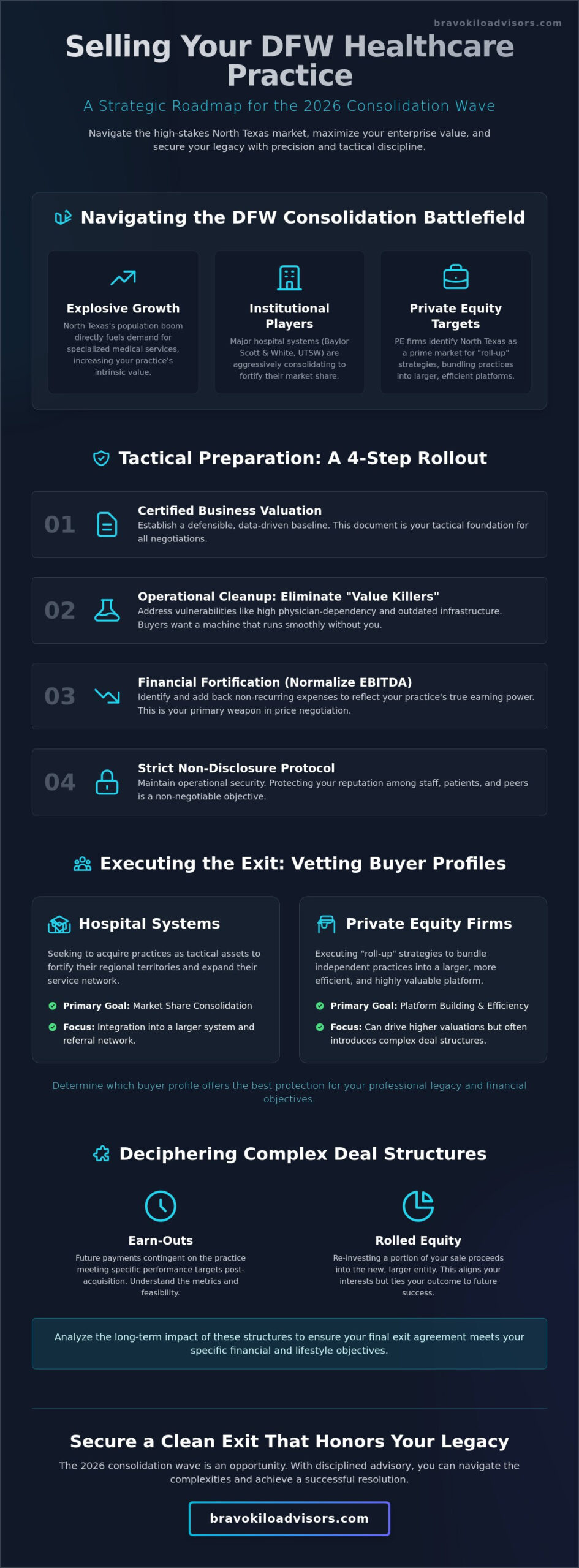
The 2026 North Texas healthcare landscape is a theater of rapid institutional expansion. Major players like Baylor Scott & White, UT Southwestern, and Texas Health Resources are not just growing; they’re fortifying their territories. When you’re considering selling a healthcare practice in DFW, you must recognize that the era of simple physician-to-physician handoffs is over. Today, you’re navigating a sophisticated environment where institutional buyers use data-driven strategies to consolidate market share.
Understanding the nuances of Mergers and acquisitions (M&A) is the first step in defending your legacy. These buyers aren’t just looking at your patient list. They’re evaluating your practice as a tactical asset within a larger regional framework. To navigate this, you need the strategic reliability of disciplined advisory to ensure your mission remains on track.
To better understand the logistical preparation required for this transition, watch this briefing from the American College of Surgeons:
Private Equity (PE) firms have identified North Texas as a primary target for roll-up strategies. These firms seek to acquire independent practices and bundle them into larger, more efficient platforms. This institutional interest can drive your valuation higher, but it also introduces complex deal structures that require expert oversight. You need to identify whether your practice is a standalone target for a hospital system or a strategic platform for a PE group looking to anchor their DFW operations.
Market Dynamics: Why DFW Healthcare is Unique
North Texas continues to experience explosive population growth, which directly fuels the demand for specialized medical services. This demographic shift makes your practice’s physical location and local reputation more valuable than ever. A critical component of your valuation is your referral network integrity. If your practice maintains deep, stable connections with local specialists and primary care providers, you possess a strategic advantage that institutional buyers are willing to pay a premium for. DFW’s fragmented market creates a significant valuation premium for consolidated groups that can demonstrate regional dominance and streamlined operations.
Tactical Preparation: Maximizing Value and Defending Confidentiality
Preparation is the phase where deals are won or lost. When selling a healthcare practice in DFW, you’re not just looking for a buyer; you’re defending a professional legacy. This requires a disciplined, multi-step rollout to ensure you don’t leave value on the table or risk a breach of operational security. Success depends on your ability to present a practice that is both profitable and sustainable without your daily involvement.
The process begins with a certified business valuation to establish a defensible baseline. This document serves as your tactical foundation during negotiations. Next, you must address operational “value killers.” Outdated billing systems or a practice that is overly dependent on a single physician can drastically lower your exit price. Buyers want a machine that runs smoothly. Financial fortification follows, where we normalize your EBITDA to reflect your practice’s true earning power in the competitive North Texas market. Finally, execute a strict non-disclosure protocol. Protecting your reputation among peers and staff is a non-negotiable objective during this transition.
The Role of EBITDA and Multiples in Healthcare M&A
Healthcare multiples in the DFW Metroplex often outpace national averages due to the region’s high density and rapid growth. To capitalize on this, you must identify and “add back” non-recurring expenses, such as one-time equipment repairs or non-essential owner perks. EBITDA normalization is the primary weapon for price negotiation. It presents your practice’s profitability in its most accurate light to institutional investors. Utilizing value enhancement services early in the process ensures these adjustments are defensible under intense institutional scrutiny.
Confidentiality as a Strategic Asset
Loose talk can compromise staff retention and patient trust before a deal is even signed. We vet every potential buyer before they ever see your “blind profile” to prevent data leaks. Managing the mission-critical notification of your key staff happens only at the correct phase of the deal. This controlled release of information ensures that your transition remains a position of strength, not a source of local gossip. By maintaining a steady, methodical flow of information, you protect the very enterprise value you’ve worked decades to build.
Executing the Exit: Vetting Buyers and Negotiating the Deal
Reaching the final stage of a transaction requires a shift from preparation to active engagement. When you’re selling a healthcare practice in DFW, the quality of your buyer is just as important as the purchase price. You must decide between Private Equity (PE) firms and large hospital systems. PE groups usually offer higher multiples but often require you to maintain “skin in the game” through rolled equity. Hospital systems might offer a more traditional integration but can sometimes feel like a loss of clinical autonomy. Understanding these nuances is critical to ensuring your post-sale objectives are met without compromise.
Deal structures in 2026 often involve earn-outs and rolled equity. These aren’t just financial footnotes; they’re long-term commitments that tie your final payout to future performance. We specialize in creating a competitive bidding environment to maximize your leverage. By bringing multiple qualified parties to the table simultaneously, we drive up the final enterprise value. Utilizing a local business broker in Dallas provides a tactical advantage over national firms. We understand the local market dynamics and the specific reputations of the buyers across the Metroplex, ensuring you aren’t walking into a partnership that doesn’t align with your goals.
Buyer Profiles in North Texas
Closing the Mission: Final Due Diligence
The final hurdle is the Quality of Earnings (QofE) audit. This intensive financial scrutiny can be disruptive if it’s not managed with a command presence. We handle the heavy lifting of data requests, allowing you to focus on daily patient care. This disciplined approach keeps the deal on track while protecting your practice from operational fatigue. It’s about maintaining momentum until the final signatures are secured. Ready to plan your exit? Contact Bravo Kilo Advisors for a confidential consultation to secure your professional legacy.
Securing Your Professional Legacy in North Texas
Navigating the complexities of the North Texas market requires more than just a listing; it demands a mission-first approach to your transition. You’ve seen how institutional consolidation and EBITDA normalization dictate the final terms of your exit. Success depends on your ability to defend confidentiality while aggressively positioning your enterprise value against sophisticated buyers. This isn’t just a transaction. It’s the final phase of a career built on excellence and patient care.
Our team brings a command presence to every negotiation, drawing on years of experience as battle-tested M&A advisors in North Texas. We’ve managed transactions ranging from $500k to $50M, providing the precision needed for complex healthcare exits. By utilizing Certified Business Valuations and a proven roadmap, we ensure your professional legacy remains intact. Selling a healthcare practice in DFW is a significant milestone that shouldn’t be left to chance or national generalists who don’t understand our local terrain.
Secure Your Legacy with a Strategic Exit Plan. You’ve built a practice that serves your community; now it’s time to ensure its future is handled with the same care you’ve given your patients for years.
Frequently Asked Questions
How much is my healthcare practice worth in DFW?
Your practice’s value is determined by a combination of adjusted EBITDA and specific market multiples. In North Texas, the valuation for selling a healthcare practice in DFW is often higher than national averages because of the region’s rapid demographic expansion and high patient volume. A certified business valuation provides the defensible baseline you need to enter negotiations with a position of strength.
How do I keep the sale of my medical practice confidential from staff?
Maintaining operational security requires a disciplined communication protocol and the use of blind marketing profiles. Potential buyers must sign strict non-disclosure agreements before receiving any identifying information about your practice. You shouldn’t notify your staff until the final phases of the deal to prevent disruption to patient care and protect your professional reputation.
Is Private Equity a good buyer for my North Texas practice?
Private Equity can be an excellent partner if your primary objective is maximizing enterprise value through a roll-up strategy. These buyers often provide significant capital for growth but usually expect you to retain a minority stake through rolled equity. It’s a strategic deployment that works best for physicians who want to stay clinically active while offloading administrative burdens.
What is the average EBITDA multiple for healthcare practices in 2026?
EBITDA multiples are highly dependent on your specific medical specialty and the size of your practice. While specific figures fluctuate, industry professionals report that the DFW Metroplex remains a premium market due to the concentration of major hospital systems and competitive bidding environments. Your specific multiple will be influenced by your practice’s reliance on a single physician and the health of your referral networks.
How long does it take to sell a medical practice in Dallas-Fort Worth?
A successful exit typically follows a six to twelve-month operational rollout from the initial assessment to the final resolution. This timeline allows for a methodical approach to financial cleanup, buyer vetting, and the intensive due diligence phase. Rushing this process often leads to tactical errors that can compromise your final purchase price or breach confidentiality.
Do I need a specialized broker to sell a healthcare business?
Specialized advisory is essential because healthcare transactions involve complex regulatory hurdles like HIPAA compliance and unique billing cycles. General business brokers often lack the tactical experience needed to navigate the specific due diligence requirements of medical acquisitions. Engaging an expert ensures that your professional legacy is handled with the precision of a mission-critical operation.